Guides
Local SEO Checklist for Laundromat Owners
Laundromat local SEO turns nearby searches into visits by matching your Google Business Profile to hours, machines, payment options, and pickup services.
Local SEO checklist for laundromat owners
Local search works best when public details match what a visitor will find. Start with the risk in front of you: wrong visit information, unclear services, equipment outages, review practices, weak performance signals, or a question governed by technical or legal requirements. Follow the matching branch and make one practical correction.
The checklist at a glance
Work down this list once, then use the branches below when something changes.
- Google Business Profile:claim and verify it, set the primary category to Laundromat, and add the address, phone number and website.
- Hours and last-wash time:match the door hours and the last wash, and update holiday hours before the day.
- Services and payments:list wash and fold, commercial accounts, oversized items, card, coin and change machine.
- Name, address and phone consistency:identical on your website, your profile, Apple Business Connect, Bing Places for Business and Yelp.
- Location page:one page with address, hours, parking, last-wash time and a map, plus one page per real service.
- Photos:the storefront with its sign, machine rows, the payment kiosk and folding tables.
- Outage notices:name the affected machines and remove the notice when the repair is done.
- Reviews:invite every customer with the same neutral wording and no reward, following the FTC's Consumer Reviews and Testimonials Rule (16 CFR Part 465). Reply to each one.
- Monthly check:compare profile views, calls and direction requests with takings.
If listing details could misdirect a visit
If a person could arrive at the wrong time or expect an unavailable amenity, repair the listing before doing more promotion. Keep the profile aligned with actual opening hours, payment choices, services, and useful features, since people use those details to decide whether to visit.
| Profile field | Example information |
|---|---|
| Description | Self-serve laundry, 42 washers and 30 dryers. Last wash 9:30 p.m., doors lock 10:45 p.m. |
| Hours | 6 a.m. to 10:45 p.m. daily, holiday hours updated the same day |
| Payments | Card and coin at every machine, change machine on site |
| Attributes | Wheelchair accessible entrance, seating, free Wi-Fi, attendant on site |
| Services | Wash and fold, commercial accounts, oversized items |
Profile fields to complete
- Primary categorylaundromat
- Hoursopening, last wash, attendant
- Paymentcoins, card, app, change
- Capacitywasher and dryer counts
- Amenitiesparking, seating, Wi-Fi, folding
Use the sample as a format, not as a target for capacity. Substitute details verified at your own shop, and update the profile whenever operations change. A search near closing depends on the last-wash time as well as door hours; revise holiday details before the affected day begins.
Rule of thumb: list only details a visitor can rely on today.
If people look for separate services
If customers search for distinct services, build useful pages around offers the shop actually sells, rather than creating pages based only on neighborhood names. A general page can answer basic visit questions, while individual service pages explain what is available and set clear expectations.
- General pageaddress, hours, last-wash time, payment methods, and parking.
- Wash and foldturnaround times, per-pound pricing, and pickup if offered.
- Commercial accountsterms for restaurants, salons, and small hotels.
- Oversized itemscomforters, rugs, and sleeping bags, with machine size limits.
Build these pages, skip those
Build
- Service pages
- Wash-and-fold, commercial, oversized
- Reason
- Distinct search intent
- NAP consistency
- Identical name, address, phone
Skip
- Service pages
- Laundromat in [suburb]
- Reason
- No real local content
- NAP consistency
- Duplicates, old addresses
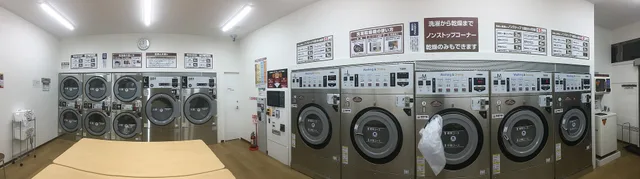
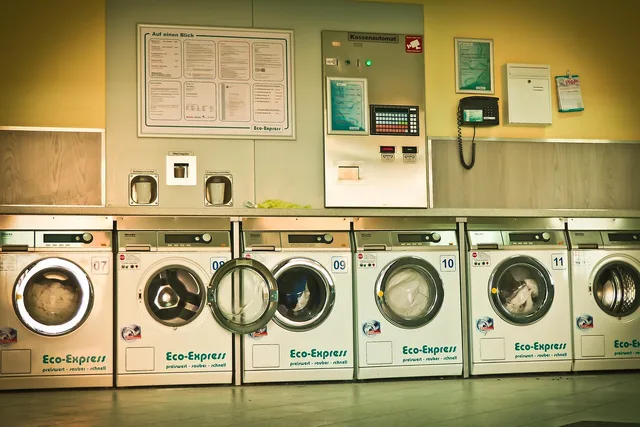
Add a neighborhood page only when a pickup route actually serves that area or another store operates there. Use a storefront image with its sign visible, then show machine rows, the payment kiosk, and folding tables. Keep the business name, address, and phone identical across the website, listing, and directories.
Set page prices using your own costs and the pricing method. State the limits of each offer, including turnaround, cost, pickup, and machine size, and avoid promoting services the shop cannot deliver.
Rule of thumb: make a page for a real offer or a place you serve.
If equipment is unavailable
If machines are out of service, publish an accurate status that names the affected equipment and gives an expected return only when you have a current estimate. That keeps a general description of the store from promising availability that a visitor will not find.
Post the notice to the profile and website, name the affected equipment, and give the expected return only while the estimate remains credible. For example: Two of 30 dryers are down for parts; delivery is expected Tuesday. All washers are running, and an attendant is on site until close.
Repeated downtime may point to deferred maintenance rather than a one-off fault. Include status checks in the preventive maintenance checklist and daily operating procedures, then align public notices with the condition recorded on the floor. Update the message if parts timing or repair progress changes.
Rule of thumb: post the current condition and remove the notice when it is stale.
If a customer has just visited
If someone has just used the laundromat, invite every customer to leave an honest review using the same neutral wording. Do not make an offer or reward conditional on posting, and do not invite only people expected to be pleased with their experience.
Reviews can influence prominence, but distance and relevance are separate local ranking factors. A neutral invitation avoids linking a reward to sentiment. Check the FTC's Consumer Reviews and Testimonials Rule before using testimonials or considering any proposed incentive. Keep requests consistent across in-person and text contact, rather than filtering recipients by likely response.
For one store, send the invitation to every drop-off customer, and print it on receipts. Respond to complaints within a day without identifying the customer or repeating private details. More ways to encourage visits appear in customer acquisition.
Rule of thumb: invite everyone neutrally, give no reward, and reply promptly.
If profile activity and takings move differently
If profile interactions rise without a corresponding change in takings, compare the signals before deciding that search visibility improved. Review profile activity and website search data alongside store revenue for the same time window, rather than treating each measure separately, before selecting a response.
The profile dashboard reports views, searches, calls, and direction requests; Search Console reports queries that led people to the website. If direction requests climb while revenue remains level, check for friction such as stale hours, unavailable machines, or payment difficulty before drawing a conclusion.
Use the monthly metrics to frame the comparison and choose what to investigate next. Local context such as nearby business counts may help describe an area, but it does not replace the store's own results for the same period.
Rule of thumb: compare profile signals with revenue, not with themselves alone.
If a decision involves technical work or regulation
If the issue depends on a technical standard or legal duty, stop short of treating it as a marketing decision. Direct utility, plumbing, electrical, gas, wastewater, equipment repair, accessibility, licensing, employment, tax, insurance, and lease questions to the relevant local authority or a qualified professional.
Marketing decisions cannot establish what applies to a particular premises. Start with the compliance checklist, then contact the authority responsible for the specific rule. For an entrance question, consult the entrance accessibility guidance. Machine safety may also need specialist review; general reference material is not a site-specific ruling.
Rule of thumb: handle visibility here, and refer regulated or technical decisions to the right authority.