Guides
Laundromat equipment list: washers, dryers, carts and utility sizing
This article lists the washers, dryers, folding tables, carts, payment systems, water heaters and softeners a laundromat needs, with sizes, brands and utility sizing
What to take away
- The equipment a laundromat cannot open without in 2027 is a short list of machines and fixtures. It starts with commercial front-load washers, matching dryers, folding tables and laundry carts.
- Add a bill changer or card readers, a commercial water heater, exhaust and makeup air equipment, and a utility sink.
- Washer capacity is counted in pounds per cycle rather than machine count. A 40-pound front loader and a 60-pound front loader are different businesses.
- Water heating, gas supply and dryer exhaust are the three systems that most often force a redesign after the machines are ordered.
- Coin and card systems decide your labor cost per visit. Card readers cut attendant hours and add monthly fees, typically $5 to $20 per machine.
- Lockout/tagout under OSHA 1910.147 applies to your own maintenance staff, and to any attendant who clears a jam.
This article covers equipment categories and the questions to ask suppliers. It is not plumbing, electrical, gas or code advice. Confirm hookups with a licensed contractor and your local building and fire authority.
A laundromat is a room full of machines that all need water, heat, power and air at the same time. The hard part is sizing each item to the store, the utility service and the lease.
The washers
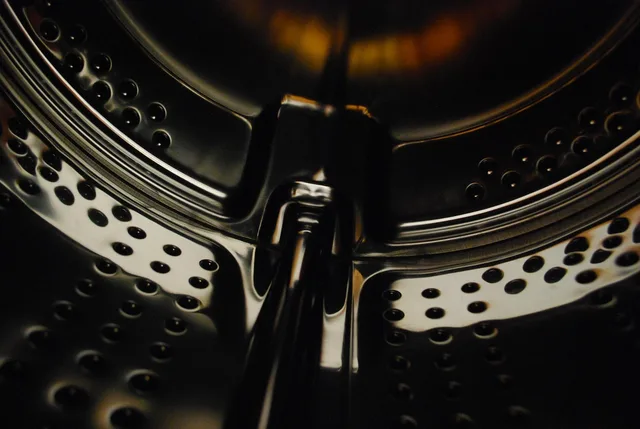
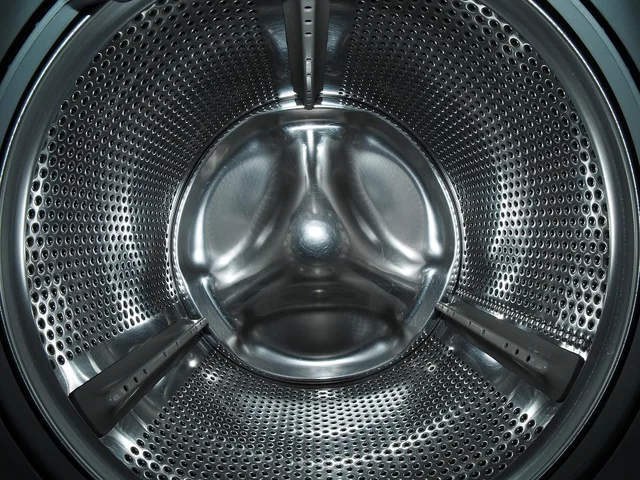
Commercial front loaders come in sizes from 20 pounds per cycle to 100. The common sizes are 20, 30, 40, 60 and 80 pounds. Speed Queen builds units from 20 to 80 pounds, and Dexter Laundry's T-350 and T-750 cover the 20 and 30-pound end. Continental Girbau, UniMac, Wascomat, Milnor and Huebsch sell into the same range.
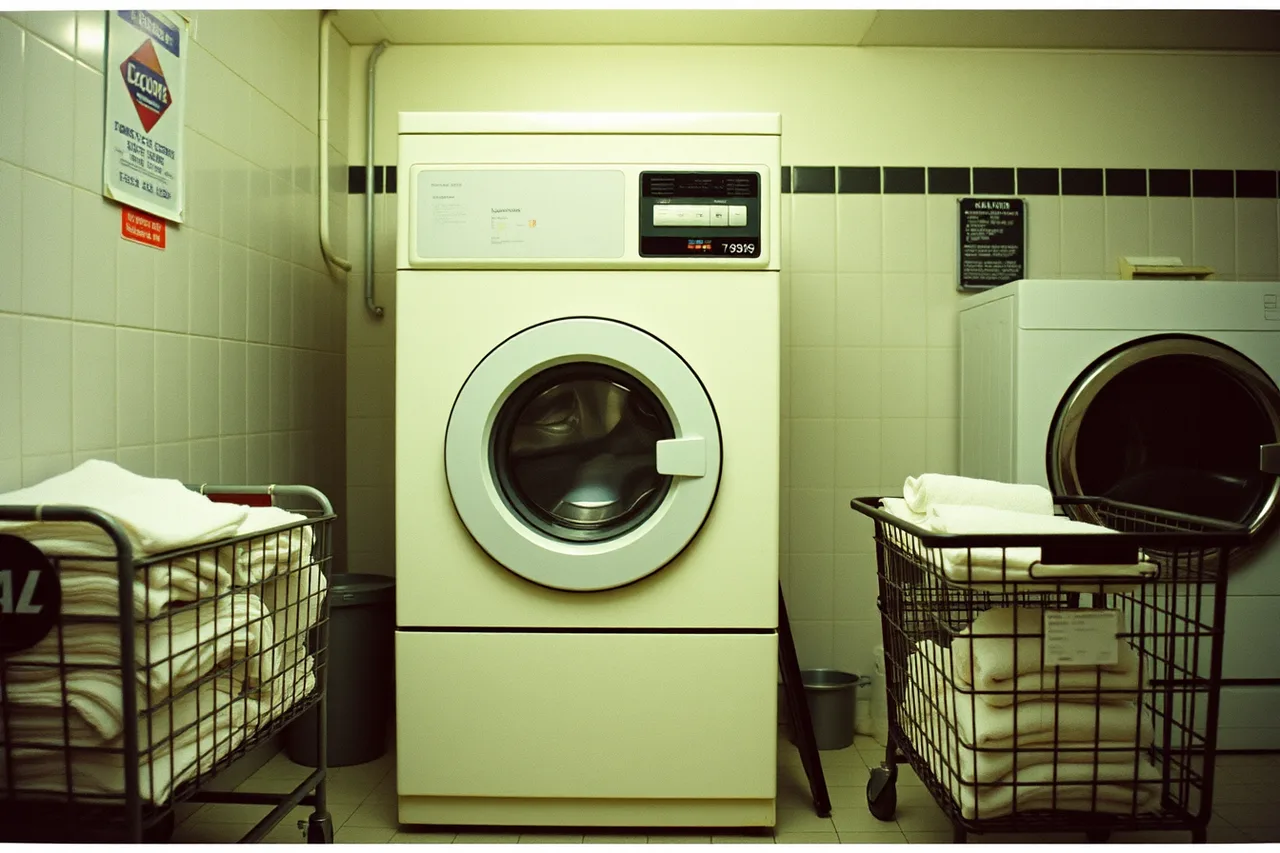
Capacity is the dry weight of laundry per cycle, so a 60-pound machine takes a family's weekly load in one pass. That is what most repeat customers want.
Top-loaders are the cheapest way to fill floor space. They suit small apartments, walk-in traffic and stores where customers do one bag at a time. A commercial top loader from Speed Queen or Whirlpool runs 3 to 6 pounds per cycle and is usually the least profitable machine per square foot.
The mix matters more than the count. A store with twelve 20-pound machines and two 60-pound machines will queue on weekends. Owners weight the floor toward 40 and 60-pound units and keep a few small machines for light loads.
Ask the supplier for the water consumption per cycle, the electrical service each machine needs, and the drain size. Those three numbers decide whether your building works. A hard-mount 60-pound washer typically wants a dedicated 208 to 240-volt circuit and a 2-inch drain connection, so confirm the figures for the model you order.
The dryers
Dryers come as stack pairs and as single pockets in 30, 45, 50 and 75-pound capacities. American Dryer Corp covers 30, 50 and 75-pound singles. Huebsch, Speed Queen and Continental Girbau sell single and stacked units.
Match dryer capacity to washer capacity at roughly two to one by weight, because a wet load weighs more and drying takes longer than washing.
Gas dryers cost less to run than electric in most markets, but they need a gas supply and venting. Every dryer needs rigid or semi-rigid duct to the outside, short runs and lint access.
The International Mechanical Code limits a single duct run to 35 feet. Subtract 5 feet for each 90-degree elbow and 2.5 feet for each 45-degree elbow. Crushed elbows and long flex duct are the most common cause of slow drying and a fire risk.
Makeup air is the part owners forget. A bank of dryers pulls a large volume of air out of the room, and if no air comes back in, the dryers starve and the doors fight you.
The mechanical contractor sizes this with the dryer count, usually as a Greenheck makeup air unit or a louvered intake.
Folding, carts and the back room
Folding tables are stainless or laminate, 6 to 10 feet long, with a shelf below, typically $400 to $1,500. Wash-and-fold operations want two or three in a line so a folder can move a load without turning around.
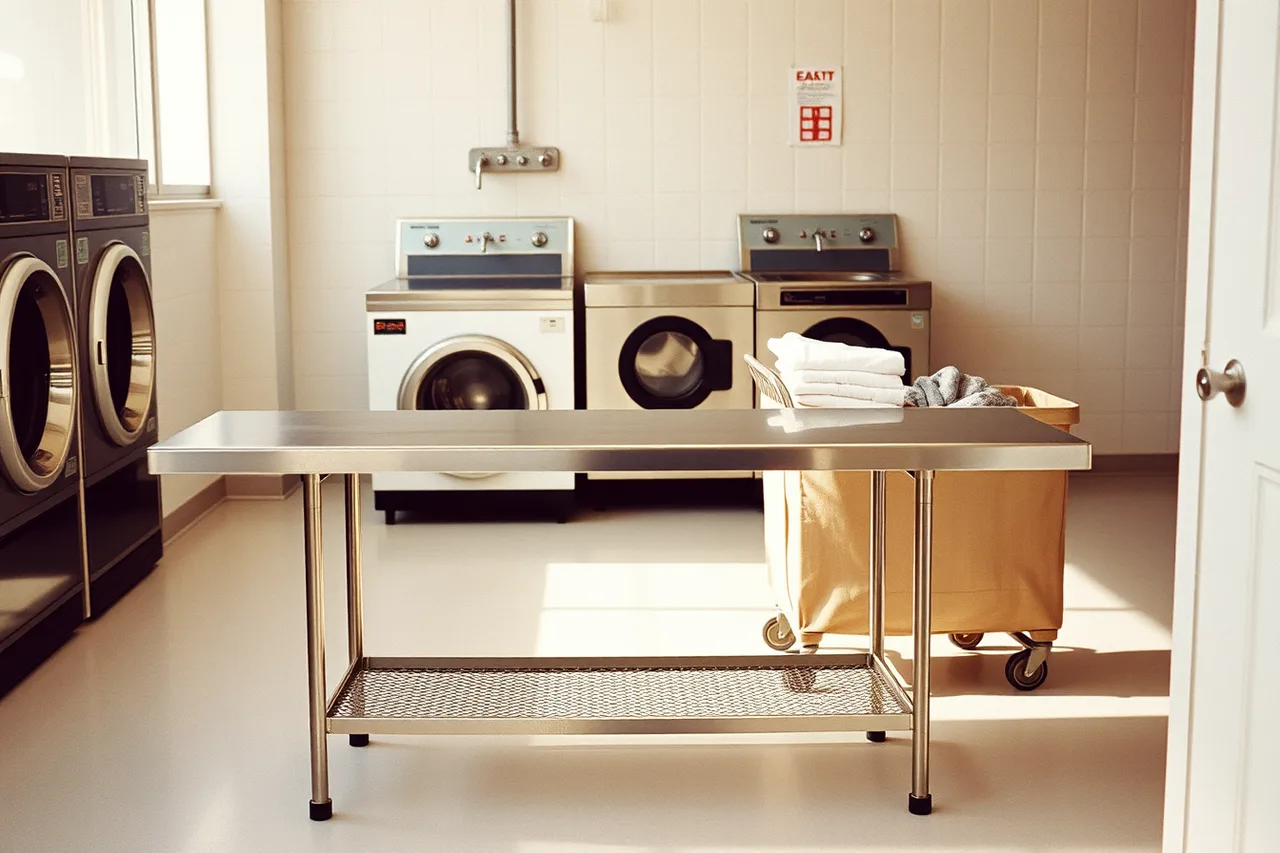
Royal Basket Trucks and Techstar Plastics build the canvas, vinyl and plastic carts stores use, in 6 to 16-bushel sizes at roughly $250 to $700 each. Buy more than you think you need.
Carts are how laundry moves from washer to dryer to table, and a shortage shows up as idle machines.
A utility sink with hot and cold water is required in most jurisdictions for chemical mixing and hand washing. Check the local plumbing code for the size and the backflow protection. A 250-pound floor scale, typically $150 to $400, sets wash-and-fold order weights.
Payment, security and the front counter
Every store needs a change machine or a card system. Coin stores need a bill changer and a coin vault; Standard Change-Makers, American Changer and Rowe build the changers, typically $1,500 to $4,500 new. Card stores need a reader on every machine and a back-office account.
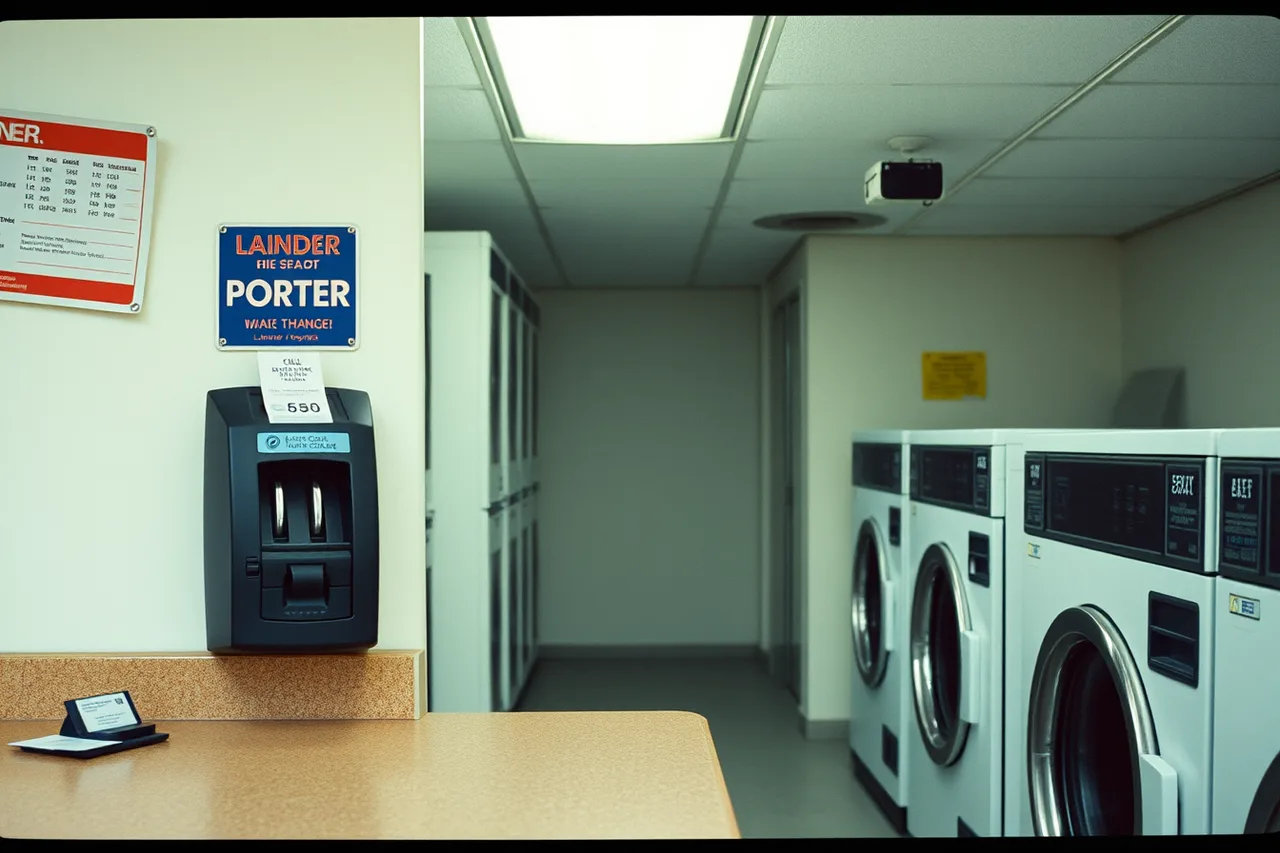
Card systems include FasCard from Card Concepts, SpyderWash from Setomatic Systems, WashCard and PayRange. They cost more up front and carry monthly fees, typically $5 to $20 per machine, plus processing.
The trade is fewer attendant hours and easier price changes against a fixed monthly cost. Price moves do not need new hardware.
The 2010 ADA Standards require at least one of each type of change machine to be reachable, with a 48-inch maximum forward reach under section 308.
The counter area needs a cash drawer or safe, a camera system covering the door and the machine aisles, and a posted closing time. Insurance carriers often ask about camera coverage before quoting.
Utilities and the machine room
Water heating is the largest utility line for most stores. The usual choices are a commercial gas storage heater from A.O. Smith, Rheem, Bradford White or Lochinvar, or a cascade of condensing tankless units such as the Navien NPE-240A2 or a Rinnai model at near 200,000 BTU each.
Size to peak simultaneous demand rather than the monthly average. Installed prices typically land between $4,000 and $9,000 for a 100-gallon commercial gas heater, with venting and gas piping extra. Undersized heaters show up as customers complaining that the hot cycle is warm.
Water softeners matter in hard-water markets. Kinetico, Culligan and Fleck-valve units on a fiberglass tank are common, sized to the store's gallons per day and typically $1,500 to $4,000 installed. Scale shortens heater life and leaves deposits on machine interiors. Test the incoming water hardness before you buy.
Ventilation and the boiler or heater room need to meet NFPA 54 for gas piping and local mechanical code for combustion air and exhaust. Do not design this yourself. A licensed mechanical contractor signs off on gas piping, exhaust and combustion air.
Labor, safety and who touches the machines
The roles that run a laundromat are attendants, wash-and-fold processors, drivers, cleaners and maintenance technicians. Each one touches different equipment, so each needs its own authorization.
Attendants clear coin jams and lint. Wash-and-fold processors run the big front-loaders and the folding line. Drivers load and unload carts. Cleaners work around hot machines and chemicals. Maintenance technicians open panels.
OSHA's control of hazardous energy standard requires covered employers to have written energy-control procedures before anyone services a machine. That covers unplugging a washer, closing a gas valve and blocking a drum. A proactive safety and health program finds those hazards before an injury does.
The Bureau of Labor Statistics tracks establishment and employment data for laundry services, which is useful for comparing your staffing against the industry. It will not tell you what your store needs.
Keep purchase records, warranties and repair invoices together. The IRS explains what records a business should keep to support purchases and depreciation.
Worked example: sizing a 3,000 square foot store
Say the store has 40 washers averaging 35 pounds and 30 dryers averaging 50 pounds. Assume a 12-minute wash cycle and a 35-minute dry cycle.
Washers: 40 machines times 5 cycles per hour is 200 cycles per hour. At 35 pounds each, that is 7,000 pounds of laundry per hour at full tilt. Real stores run well under that.
Dryers: 30 machines times 1.7 cycles per hour is about 51 cycles per hour, or 2,550 pounds. The dryers are the bottleneck, which is normal. Add dryers or shorten the dry cycle with better venting.
Water: at roughly 3 gallons per pound washed, 7,000 pounds is 21,000 gallons per hour at peak. That number, not the monthly average, sizes the water heater and the incoming service.
Substitute your own machine counts, cycle times and gallons per pound. The arithmetic is the same.
Common questions
How many washers do I need to open?
There is no universal count. Start from the customer mix you expect, then work backward from pounds per hour. A store near apartments with families needs more 60-pound machines than one near a college.
Do I need a card system or coins?
Both work. Coins cost less to install and more to collect. Cards cost more up front and add monthly fees, but they cut attendant hours and make price changes easy. FasCard, SpyderWash and PayRange all charge per machine or per transaction. Pick based on your labor plan.
Can I buy used machines?
Yes, and many owners do. Check the age, the hours on the control board, and whether parts are still made for that model. A used machine with no parts supply is a future removal cost.
Who signs off on the gas and exhaust work?
A licensed mechanical contractor, and your local building and fire authority. Do not let a machine installer run gas lines or design exhaust. Keep the permits and the inspection record with the equipment file.
Keep a short decision log for the laundromat equipment list. Record the assumption, the evidence, the choice, the owner and the date, plus the expected result and the next review.