Guides
OSHA and NFPA compliance for US laundromat machine rooms, a checklist
US laundromat machine rooms answer to OSHA 1910 and the NFPA codes your state adopts, and the paperwork has to be ready before an inspector arrives.
What to take away
- OSHA writes no laundromat standard. Your machine room falls under the 1910 general industry rules, and roughly half the states run their own approved program that can be stricter.
- Servicing a washer requires a written energy control program under 1910.147, a machine-specific procedure for every model, and a lock applied by the person doing the work.
- Electrical work follows 1910.303 for installation and 1910.334 for practice, with wiring installed to the NFPA 70 edition your jurisdiction has adopted.
- NFPA 1 and NFPA 101 become law only when a state or city adopts them, and local amendments often go further than the model text.
- One binder holding standards, lockout records, training sheets, permits and service logs is what an inspector actually asks to see.
The OSHA 1910 rules that reach a laundromat machine room
OSHA does not publish a laundromat standard. It publishes general industry standards, and they apply the moment you have employees.
The 1910 general industry standards cover walking surfaces, exits, electrical systems, hazardous energy and chemical communication in one place. That page is the spine of your compliance file.
Start with the floor. Washers leak, and a wet walkway is a citation waiting to happen. Fix the leak rather than mopping around it, and keep carts and buckets out of the aisles between machine rows.
Blocked egress is the fastest citation an inspector can write and the easiest to prevent with a nightly sweep.
Then look at the wall. OSHA expects the standards that apply to your workplace to be available to employees, and inspectors ask to see them. Print the subparts that touch your room and keep them in the office.
State plan states change the picture. California and New York, among others, add requirements the federal text does not contain. Check the state program's version of a rule before you rely on the federal wording.
Headcount does not matter for electrical safety or hazardous energy. Those apply whether you have one attendant or twelve. Your compliance checklist should name the standards you keep on file, not only the tasks you perform.
Lockout/tagout under 1910.147 when a washer is serviced
A washer stores energy in more places than most owners count: electrical at the motor, mechanical in the drum and drive, thermal in the water and steam lines, pressure in the supply hoses.
Lockout/Tagout Service Sequence
- Notify affected attendant machine is out of service
- Shut down washer using normal stopping sequence
- Isolate breaker, disconnect, water, steam, drain, gas
- Lock and tag each isolation point
- Release or block stored energy
- Verify zero energy by start test and voltage
- Service the machine
The lockout/tagout standard requires all of it controlled before a technician reaches inside.
The written energy control program comes first. It names who may service equipment, what devices they use, and how they verify energy is gone. Without that document, the locks on your machines are props.
Each washer model then gets its own written sequence for shutting down, isolating, blocking and verifying. Three models from two makers means at least three procedures. A generic page copied from a manual does not satisfy the standard when a machine has extra energy sources.
Lockout/tagout under 1910.147
- Tell every affected attendant the machine is going out of service.
- Shut the washer down using its normal stopping sequence.
- Isolate every sourcebreaker, disconnect, water valve, steam valve, drain, and any gas or pneumatic supply.
- Lock and tag each isolation point, one lock per worker when two people are on the machine.
- Release or block stored energy, including drum position, spring tension and trapped water pressure.
- Verify zero energy by trying the normal start control and testing for voltage and pressure.
- Service the machine, then remove locks and tags in reverse order and restore energy.
Training is not a signed sheet. Authorized employees learn the procedures and the devices. Affected employees, the attendants working nearby, learn to leave a locked disconnect alone. Retrain when a procedure changes or when someone's performance shows a gap.
Log each lockout with the machine number, the date, the sources isolated and who applied the lock. Those records show an inspector what happened after an incident, and they show you which machines fail often enough to replace. That pattern belongs in your equipment checklist.
Contractors follow the same program. Ask for their procedure before they start and confirm they bring their own locks. Locking out a machine on a contractor's behalf is not a lockout.
Electrical safety in a wet machine room: 1910.303 and 1910.334
Water and electricity share your building every hour you are open. OSHA splits the rules into installation and work practice, and laundromats run into both.
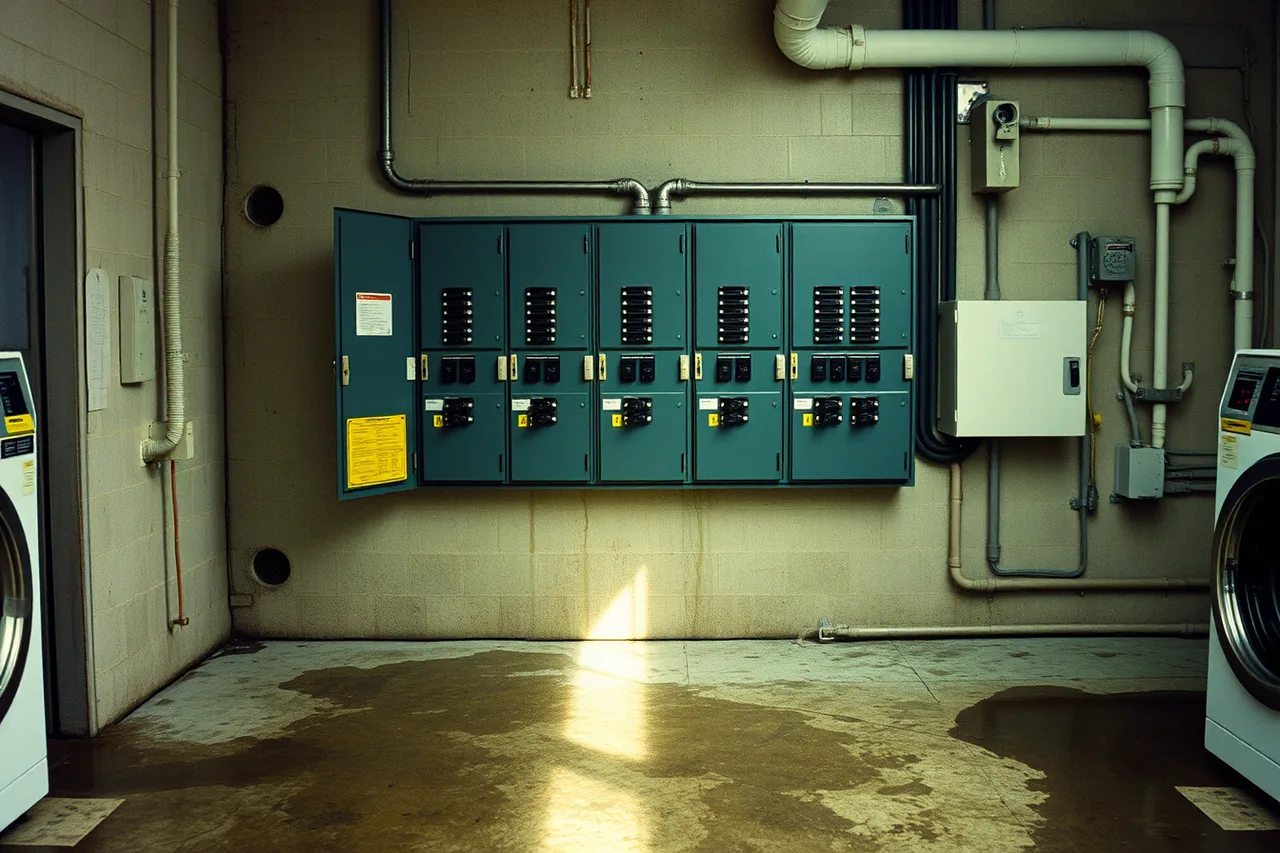
The OSHA 1910.303 electrical installation rules cover approved equipment, marking, working space around gear and guarding of live parts. In practice: panels stay closed, breakers are labeled, and nothing sits in the clearance in front of a disconnect. A stack of detergent buckets blocking that space is a violation and a fire risk.
1910.334 covers the practice side. Inspect portable cords before use and pull damaged ones. Extension cords do not replace permanent wiring. Ground fault protection goes where the standard and local code require it, and it gets tested on a schedule you can show.
Humidity is the hard part. Commercial washers throw splash and condensation, so every electrical decision in the room assumes moisture is present. Receptacles, disconnects and junction boxes need enclosures rated for a wet or damp location, and a drain backup that floods the floor belongs in the plan.
Check panel capacity before you add machines. Older laundromats often run near the limit of their service, and high-efficiency washers with larger motors can push past it. An electrician's load calculation costs far less than a failed inspection.
Log every electrical inspection, repair and panel change with the date, the electrician and the parts replaced. That log answers the maintenance question faster than memory.
NFPA 70, NFPA 1 and NFPA 101: what to keep on file
NFPA documents are not federal law. They bind you when a state or city adopts them, which most do. Know the edition your jurisdiction adopted and keep evidence your building matches it.
NFPA Codes and What They Control
NFPA 70
- Scope
- Washer wiring
- Key rules
- Circuits, grounding, bonding
- Record to keep
- Permits and load calcs
NFPA 101
- Scope
- Egress and occupancy
- Key rules
- Exit width, signage, lighting
- Record to keep
- Occupancy load posted
NFPA 1
- Scope
- Fire prevention
- Key rules
- Housekeeping, hot work, storage
- Record to keep
- Fire marshal reports
The NFPA 70 electrical code, the National Electrical Code, governs how washers are wired. Those rules cover:
What to keep on file
- branch circuits
- overcurrent protection
- grounding
- bonding
- wet-location conditions Requirements shift between editions, so ask your electrical inspector which one is in force and keep the permits and load calculations for every machine you installed.
The NFPA 101 life safety code governs egress, occupancy and protection features. In a laundromat it drives exit access width, door swing, emergency lighting, exit signage, and the separation between machine room and customer area. If the machine room doubles as storage, NFPA 101 sets how much combustible material can sit there.
NFPA 1, the Fire Code, gathers fire prevention requirements including housekeeping, hot work, electrical safety and storage. It is often the document a fire marshal cites during an annual inspection.
NFPA 70, NFPA 1 and NFPA 101
| Document | What it controls | Record to keep |
|---|---|---|
| OSHA 1910 | General industry safety in the machine room | Printed subparts, inspection logs |
| OSHA 1910.147 | Hazardous energy control during service | Written program, machine procedures, training records |
| OSHA 1910.303 and 1910.334 | Electrical installation and work practices | Panel labels, repair log, cord inspections |
| NFPA 70 (NEC) | Wiring, grounding and protection for washers | Permits, load calculations, adopted edition |
| NFPA 1 | Fire prevention and housekeeping | Fire marshal reports, storage rules |
| NFPA 101 | Egress, occupancy and life safety | Occupancy load, exit plan, lighting tests |
Editions change on adoption cycles, so a file built five years ago may cite a code your jurisdiction no longer enforces. Review adopted editions annually and note the change in your licensing and compliance records so the history stays intact.
Local amendments are common and often stricter. A city may require extra clearance around dryers or a specific hood system. Those live in the local code, not the NFPA document, so confirm with the fire marshal's office before you renovate.
Ventilation, heat and chemical safety in the machine room
A machine room without airflow becomes a heat box by mid afternoon. Dryers, water heaters and motors reject heat into the same space, and attendants work in it for full shifts.
Makeup air must match what the exhaust removes. When dryers pull air out faster than the room replaces it, the space goes negative, doors fight you, and dryer performance drops. An HVAC contractor can measure the balance and tell you whether you need more makeup air.
Temperature and humidity control protect equipment as much as people. High humidity corrodes controls, shortens motor life and makes floors slippery. Dehumidification or added exhaust often pays for itself in fewer service calls, a tradeoff worth weighing in your operations and workflow planning.
Chemicals belong in the same conversation. Detergents, bleach, softeners and cleaners are hazardous chemicals under OSHA's hazard communication requirements. You need a safety data sheet for each product, reachable by attendants on every shift, and every container labeled. A binder behind the counter works if everyone knows where it is.
Training covers reading a safety data sheet, what to do after skin or eye contact, and how to handle a spill. Bleach mixed with an acid cleaner releases chlorine gas, so attendants must know never to combine them. Record the training with names and dates.
If you run gas dryers or a gas water heater, add a carbon monoxide check. A qualified technician inspects exhaust systems and burners annually, alarms go in the room, and the service reports join your other records.
Gloves for chemical handling, eye protection when mixing and closed toe shoes on the floor are the baseline. Anything more belongs in the written procedure rather than in someone's judgment.
The document file an inspector asks to see
This checklist is the working file. Print it, work through it, and revisit it after any equipment change, remodel or new hire. The SOP checklist covers daily routines; this one covers documents.
Inspector Document File Checklist
- OSHA 1910 subparts printed
- Written energy control program signed
- Machine-specific lockout procedures
- Locks, tags, hasps stored accessibly
- Panel labels and clearance clear
- NFPA editions and permits on file
- SDS and hazcom training records
- OSHA 1910 subparts that apply to your room, printed
- Written energy control program under 1910.147, signed and dated
- Machine-specific lockout procedure for every washer model on the floor
- Locks, tags, hasps and blocking devices stored where authorized staff can reach them
- Lockout record for each service event, with date, machine and energy sources
- Panel labels in place, working clearance clear, damaged cords out of service
- Electrical repair and inspection log with contractor names and dates
- Adopted NFPA 70 edition on file, plus permits and load calculations per machine
- Adopted NFPA 1 and NFPA 101 editions on file, local amendments noted
- Occupancy load posted, exit signs lit, emergency lighting tested on schedule
- Ventilation balance report and annual dryer exhaust and burner service records
- Safety data sheet for every chemical on site, accessible to attendants
- Hazard communication training records with names and dates
- Carbon monoxide alarms installed and tested in the machine room
- Fire marshal reports and correction notices, with proof of completion
- State plan addenda reviewed if your state runs its own OSHA program
Work the list in order and date each line as you finish it. A completed checklist with dates is evidence of a working program. An undated one is a to-do list.
Give one person ownership of the file. In a small operation that is the owner or manager, and the job includes an annual review of adopted code editions, training refreshers and equipment changes. Add a machine and the file gains a load calculation, a lockout procedure and a service log entry.
Insurance carriers ask for the same documents after a claim. A file already assembled shortens that process. That alone justifies the hour it takes to build.
Common questions
Does OSHA apply to a laundromat with only a few employees?
Yes. Coverage under the general industry standards does not depend on headcount, and the electrical and hazardous energy rules apply in any machine room where employees service equipment. Some recordkeeping exemptions exist for small operations, but the safety standards themselves still apply.
What separates an authorized employee from an affected employee under 1910.147?
An authorized employee performs the service and applies the lock. An affected employee runs the machine or works near it but does not service it. Both need training, and the content differs: authorized employees learn the procedures, affected employees learn to leave locks and tags alone.
Which NFPA edition does my laundromat follow?
Whichever edition your state or local jurisdiction has adopted. Adoption cycles vary and local amendments can add requirements, so confirm the current edition with your fire marshal or building department and keep that edition on file rather than an older copy.
How often should lockout procedures be reviewed?
Review them whenever a machine is added, replaced or modified, and at least annually. Review again after any incident or near miss. The written procedure has to match the machine as it sits today, not as it was installed years ago.