
Guides
How a laundromat hires people it can count on
Laundromat hiring works when roles are written as machine-cycle tasks, tested on the floor, and checked against federal wage and hiring rules.
What to take away
- Write each job as work on the machine cycleload, wash, dry, fold, cash, and the customer standing at the counter.
- Test a candidate on the actual floor before you decide, and ask references about the bad days.
- Keep a current list of who may touch cash systems, chemicals, gas shutoffs, and customer accounts.
- The BLS tracks establishment, employment, and earnings data for laundry services, which gives you a checkable baseline for pay and headcount.
- Federal wage, overtime, timekeeping, and recordkeeping duties apply from the first employee you hire, and state rules can add more.
This article covers general laundromat business information, not legal, tax, insurance, or employment advice. Hiring rules vary by state and municipality, so confirm your obligations with a licensed attorney and your state labor office.
A laundromat runs on cycles, not titles. A washer fills, washes, drains, and spins on a timer. The attendant's job is to keep those cycles moving and the floor safe between them. Write the role that way and the hiring conversation gets concrete.
Skip the national benchmark you found online. Your mix of self-service, wash-dry-fold, and commercial accounts decides what you actually need. A store with heavy drop-off volume needs a different person than one that mostly sells tokens.
Write the role around the machine cycle
Start with what the person touches. Which machines do they load, which chemical dispensers do they refill, which card or coin system do they reconcile at close? Name the equipment in the posting.
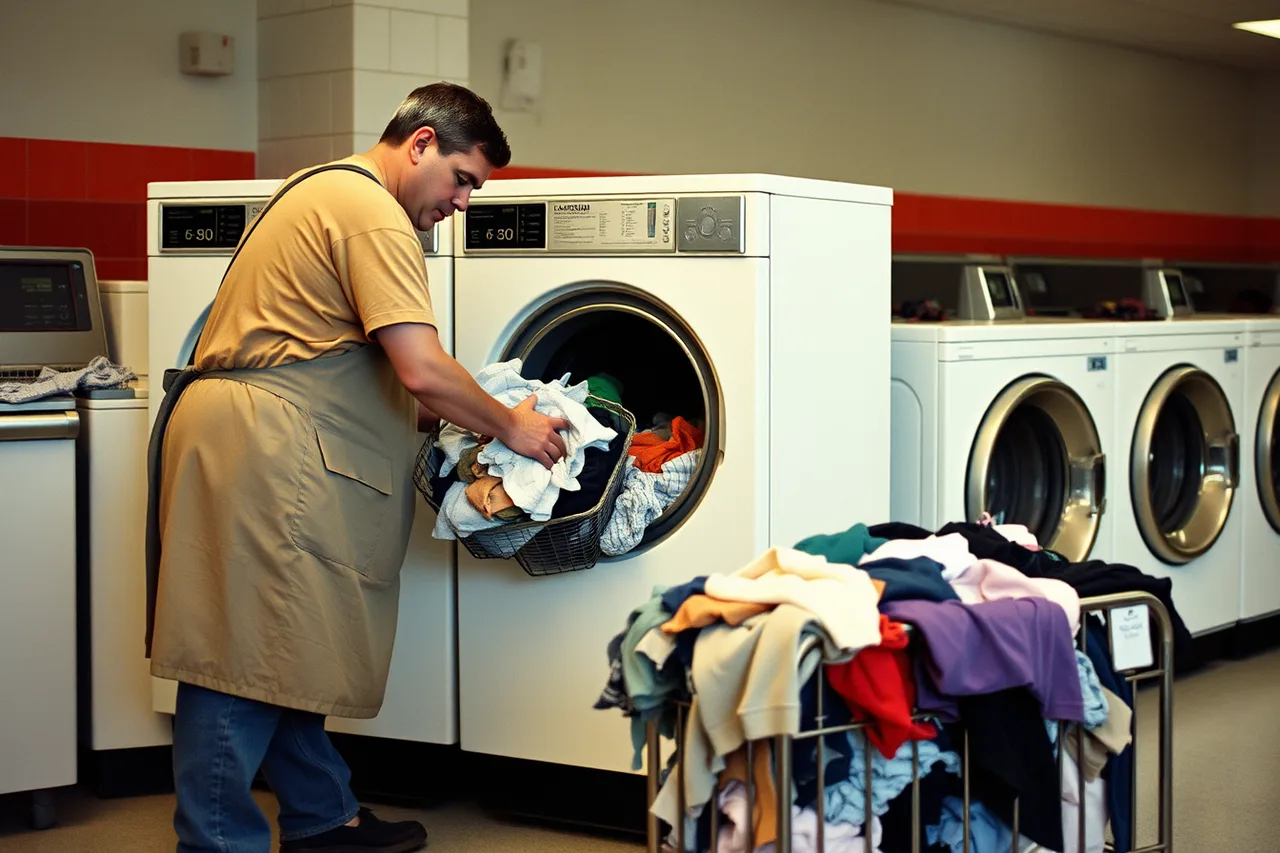
Then name the customer moments. Opening the door at 6 a.m. is a different job than closing at 10 p.m. Sorting a wash-dry-fold bag is different from answering a question about a jammed dryer.
A written role that lists tasks, not adjectives, tells you what to test. It also tells a candidate what the shift actually feels like before they accept it.
Test on the floor, not in the interview
Bring the candidate in for a paid shift during a normal week. Watch how they sort a mixed load, handle a customer whose dryer ate a quarter, and reset a machine after a fault.
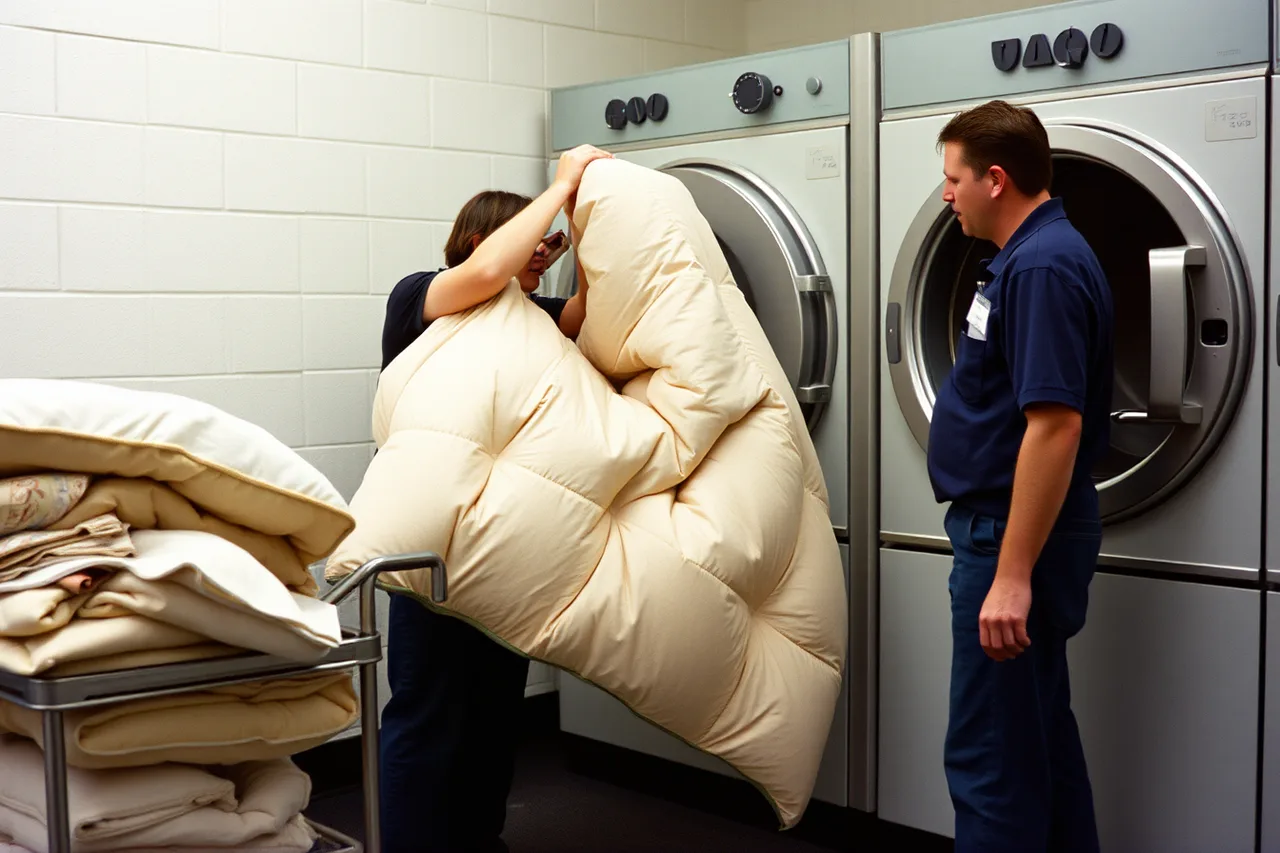
Winter bedding loads are the honest test. Comforters and mattress pads are heavy, they fill a machine differently, and they slow the whole floor. If your store sees that volume from November through March, a candidate should see it before you hire them.
Ask references about the bad days. Anyone can describe a good shift. Ask what happened the last time a machine flooded or a customer got loud, and what the candidate did.
Score every candidate on the same three questions, from 1 for no answer to 3 for a clear one.
Test on the floor
- Walk me through the last time a machine stopped mid-cycle with a customer's load inside. What did you do first?
- A customer says a dryer ate a quarter. What do you say, and what do you do?
- Tell me about a shift when you fell behind. What did you drop, and what did you protect?
Ask references the same shape of question: what happened the last time a washer flooded on their shift, and what did they do about it?
Keep authorization current
Some tasks need a named person on a current list. Cash handling, chemical dispensing, gas shutoff locations, and customer account access all qualify. Write the list down and give one person the job of keeping it up to date.
Tenure is not authorization. A worker with five years on the floor may still not be the right person to reset a boiler fault. That call belongs to a licensed technician and your equipment manufacturer's service documentation.
What to check before you post the job
Work through this list first.
Before you post the job
- Job descriptionone page of tasks from the machine cycle, shift hours, physical demands, and who the person reports to.
- Pay rangea number you can defend, with the source written next to it.
- Classificationexempt or non-exempt under the Fair Labor Standards Act, plus any stricter state rule.
- Required postingsfederal and state notices, at the store and in the hiring file.
- Onboarding paperworkForm I-9, Form W-4, state withholding, and direct deposit.
U.S. Bureau of Labor Statistics: Drycleaning and Laundry Services: Industry at a Glance publishes establishment, employment, occupation, and earnings data for laundry and personal services. Take the annual mean pay for the occupation closest to your attendant role, divide by 2,080 hours, and treat the result as a typical range.
U.S. Department of Labor: New and Small Businesses covers duties that start with your first hire:
State law can add
- wage
- overtime
- timekeeping
- child labor
- leave
- recordkeeping State law can add requirements on top.
U.S. Equal Employment Opportunity Commission: Small Business Resource Center explains nondiscrimination, accommodation requests, employment records, and workplace notices for small employers. Read it before you write the interview questions.
Where to find candidates
Post where the people you want already look.
- A sign at your counter and a line on the receipt.
- Community bulletin boards at the library, the grocery store, and apartment laundry rooms.
- Referrals from current attendants, paid after ninety days rather than on day one.
- Community college job boards and state workforce offices.
Building the team, step by step
- Decide the shift pattern, who covers callouts, and how the schedule gets posted two weeks out.
- Run a paid trial on the actual floor, with the washers and dryers running.
- Ask references about the bad days, not the good ones.
- Train alongside a trusted worker through a full cycle, including winter bedding loads if the timing allows.
- Hold the first-quarter review against the written role, set the next quarter's schedule, and ask what would keep the person another year.
For the full sequence from first posting through the ninety-day review, see the laundromat hiring and training guide. Check that the link is live before you publish, or replace it with the steps above.
Common questions
What goes wrong when a laundromat hires on personality?
Personality tells you who is pleasant to talk to, not who can run a floor. Score candidates against the tasks you wrote down, verify credentials and references lawfully, and document the decision. Familiarity is the most expensive shortcut in a small store.
Who should be allowed to reset a machine or touch the boiler?
Only a licensed technician, following NFPA and OSHA standards and the manufacturer's service documentation. Attendants can clear a coin jam or a lint trap. Anything involving gas, electrical panels, or boiler controls is out of scope for floor staff, regardless of experience.
How do I check what I owe a new hire under federal law?
Start with the Department of Labor's small business compliance pages, then check your state labor office, because state wage and overtime rules can be stricter. A CPA or payroll service can confirm withholding and recordkeeping. This article does not give tax or employment rulings.
What does the BLS data actually tell me?
It gives you current establishment counts, employment levels, and earnings for the laundry services industry, which is a checkable baseline for your own pay scale and staffing plan. It does not tell you what your store needs on a Saturday morning. Use it as a comparison, not a plan.